7. Interactivity in Digital Narrative

Ever since I accidentally discovered the Kerrygold website (https://kerrygold.com/ie/) back in my second year of college while researching for a group project, it has remained one of my favourite websites I have ever visited. It’s quite ironic that it’s just a website for butter but it has so much depth and levels of varied interaction to it. It is beautifully designed and I always like to refer to it for inspiration whenever I am designing a website.

The homepage includes a gallery with hover animation features that provide information when your mouse hovers over an image. A few of the pages include a timeline feature which would be one of my favourite web design elements (https://kerrygold.com/ie/heritage/). As you scroll down the screen it offers information on the history of the company throughout the years. There is also a mix of media used such as video, audio, images and text as you scroll through each item. It is very aesthetically pleasing as there is a consistent flow as you scroll and navigate throughout the page.

It also includes a page for recipes that use Kerrygold butter. It is displayed very nicely with the method on the left and ingredients on the right while under it all it has links to their social media accounts that invite you to further interact with the company.

I know it’s just a website for butter but the astonishing amount of skill and thought that went into developing this site is so evident once you open it. The timeline pages in particular had a very strong effect on me because of the amount of different modes of interactive design that are used. Each page tells a different story of the product that immerses the viewer https://kerrygold.com/ie/grass-fed/our-way/#header -> this page probably being my favourite.

Instead of just offering a simple website that lists their products, they turned their website into a digital narrative that tells a lovely story.

6. Game Analysis

Related image
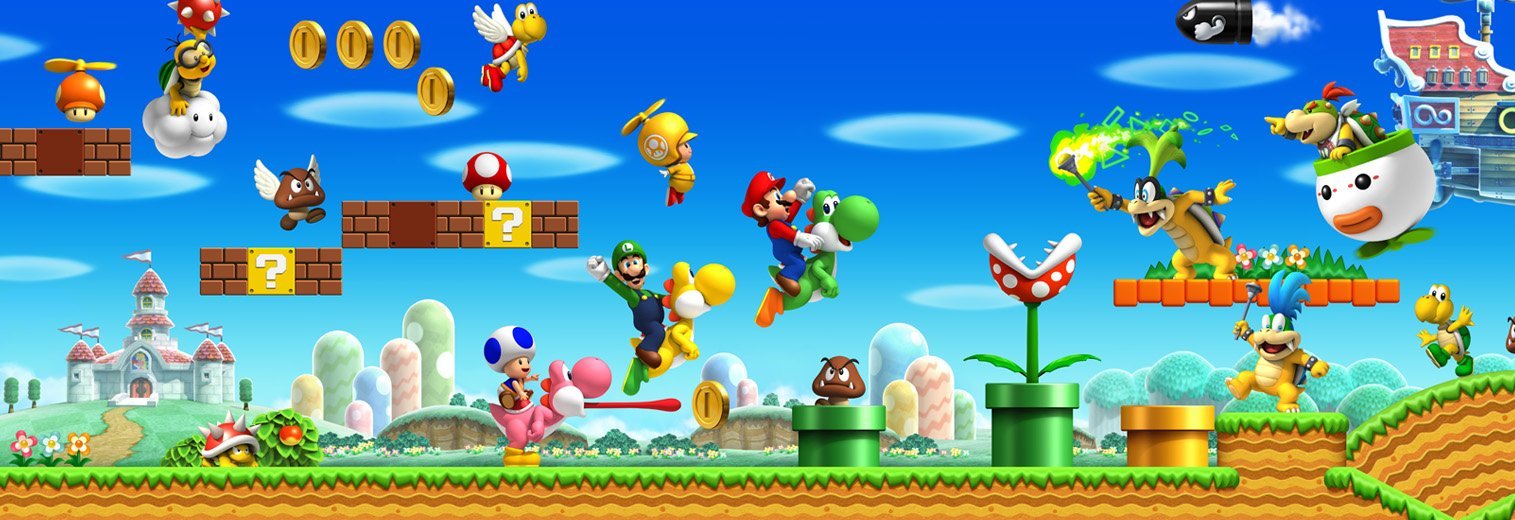
https://www.amazon.com/New-Super-Mario-Bros-Wii/dp/B002BRZ9G0?th=1

For this week’s blog post, I will be analysing the Nintendo Wii game, New Super Mario Bros Wii. I got this game for Christmas about 10 years ago and to this day it is still one of my favourite games to play. I recently got a Nintendo Switch so I am looking forward to purchasing Mario Bros on that to compare it to the Wii version. But for now, I will be discussing the Wii version.

New Super Mario Bros. Wii is a 2D side-scrolling platform video game (https://en.wikipedia.org/wiki/New_Super_Mario_Bros._Wii ). It is full of adventure and colour and even though it may look like a children’s game, I believe it is perfectly suitable for all ages which is one of the amazing things about the entire Mario franchise.

The plot is a simple one: Princess Peach gets kidnapped -> Mario along with Luigi and the Toads must rescue her by travelling through different worlds and completing tasks -> Once they complete all the worlds and defeat Bowser, Princess Peach is saved.

There is nothing remarkably new or exciting about the plot of this game but as Ludologists would see it, it is about the game-play as opposed to the narratological view that games should be understood as novel forms of narrative. Each level involves the same goal: to reach the end before the given time to complete it but every level is still different from the theme to the music to the new characters and enemies you must defeat along the way. A great use of narrative descriptors are used throughout the game such as instructional text, mainly provided by the character, Toad, interface elements such as nun-chucks and the map screen, and visual elements which comprise the field of view of the player.

The game design of New Super Mario Bros. Wii also involves employing and balancing use of embedded and emergent narrative. This use of narrative contributes to the immersion of the game for the player and creates a really enjoyable experience. Overall it’s a great game and I can’t wait to try it out on the Nintendo Switch!

4. Picture Essay – ‘Life on Campus’

Eve my sister driving us into college, beautiful weather today.
Managed to get the last parking space on campus, today must be a good day.
Arriving at my lecture preparing to focus for the next 50 minutes
Hmm which sandwich to have for lunch? No point asking myself this anymore,it’s gonna be the usual again today; the chicken salad sandwich
Now to find a place for my friends and I to sit so we can enjoy our lunches
Last class of the day, nothing like a bit of Research Methods..
My turn to drive Eve and I home
And I’m into bed, better do some college work before I fall asleep!

3. Narrative Structure Analysis

Image result for happy gilmore
https://ew.com/article/2016/02/16/happy-gilmore-ew-review/

For this blog post, I have decided to write about the 1996 comedy, Happy Gilmore. Happy Gilmore is one of my favourite films even though it’s as old as I am. I will be applying it to Todorov’s theory and Propp’s character types.

Firstly, here is Todorov’s Cycle. In regards to Happy Gilmore, these 5 stages can be applied quite well.

  1. Equilibrium: The main character, Happy is an ice hockey player, and with his ice hockey mentality comes his aggressive nature. He lives alone and has a close relationship with his grandmother who raised him as a child.
  2. Disruption: Happy goes to visit his grandmother one morning to find that the IRS are repossessing her house as she hasn’t paid any taxes in years. Happy is told he needs to come up with $270,000 in order to get the house back.
  3. Recognition: That day, Happy discovers he has an extraordinary golfing talent. He realises he could make money out of it by entering tournaments and hopefully be able to buy his grandmother’s house back.
  4. Repair: Happy begins winning multiple golfing tournaments and earning large cheques. With a few ups and downs along the way, it all builds up to the Tour Championship, the final competition that can get Happy enough money to get his Grandmother’s house back.
  5. Restoration: Happy days, he wins the championship and is able to get his Grandmother’s house back so she can move back in and get out of the torturous nursing home she had been staying in. And hey look at that, Happy also somehow managed to get a girl along the way.

Propp’s Character Types in Happy Gilmore:

The Hero: The main character, Happy Gilmore.

The Villain: Shooter McGavin, Happy’s rival who threatens to buy his Grandmother’s house only to burn it down. He was also constantly scheming to find ways to sabotage Happy’s golf play.

The Donor: Chubbs befriends Happy and offers him golf training. He is one the first people to believe in Happy. He didn’t just share his wisdom with Happy, he also gave him a gift of a putting club in the shape of a hockey stick. This is right before Happy gives him the alligator’s head that bit his hand off many years before which lead Chubbs to fall out the window behind him and die.

The Dispatcher: I guess in this case the dispatcher would be Happy’s grandmother. She is trusting him to get her house back so Happy’s mission or quest is to somehow get enough money to do this for her.

The Helper: Since Chubbs is already the donor, I’ll give the role of the helper to Virginia, the sports journalist who actually ends up with Happy. She is always there to help and support him and give him a few tips on how to win. Happy is eaily adgitated and Virginia is able to calm him down in situations where his anger takes over.

Prize: The prize is his Grandmother’s house. This is won at the end when Happy wins enough money to get it back which was the whole reason he started playing golf in the first place.

False Hero: From the beginning we are rooting for the main character and hero of the story, Happy Gilmore. The villain, Shooter McGavin is an obvious villain for us as the audience however the characters within the story are generally rooting for Shooter i.e. the public and media and the sports fans coming to the tournaments because Shooter is the number 1 player. His true colours are well and truly shown at the end where he loses the golf competition and steals Happy’s golden jacket and tries to run away with it. This is where he lost any remaining respect he had left from other people in the story.

2. Analogue Narrative Analysis

Espen Aarseth defines cybertext as a text in which its mechanical organisation is a fundamental part of a reader’s literary exchange with the text, and which actively invites readers to make specific choices about how to navigate through that text.
“when you read from a cybertext, you are constantly reminded of inaccessible strategies and paths not taken, voices not heard. Each decision will make some parts of the text more, and others less, accessible, and you may never know the exact results of your choices; that is, exactly what you missed”.(Aarseth, pp. 1-2). In other words, the reader dictates the level of engagement.

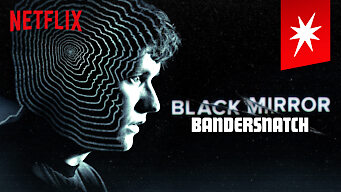
In 2018, the Netflix show Black Mirror released an interactive film, Black Mirror: Bandersnatch. It is about a young programmer who is creating a game based on a novel that involves the reader choosing their own pathway within the story. What is really interesting about Bandersnatch is that it is interactive and, similar to the book, it allows you at points throughout the film to choose which route you would like to take. It just screams Cybertext.

Image result for bandersnatch
https://www.joe.ie/movies-tv/black-mirror-bandersnatch-guide-653267

I have chosen to write about Bandersnatch because it’s new, it’s different and I really enjoyed it. It wasn’t a movie where you just sit back and watch, it enables you to fully immerse yourself in the story through its exciting use of cybertext.

It starts off by giving you simple choices like what cereal to have for breakfast: Sugarpuffs or Frosties. As the movie progresses the choices begin to accelerate into deciding how you are going to kill your dad. Here is a flow chart of all of the possible paths the viewer can take.

Related image
https://www.inverse.com/article/52130-black-mirror-bandersnatch-every-ending-reddit-how-to-get-the-best-ending

With cybertext, the journey to the overall message of a story is just as important as the message itself. Bandersnatch involves the viewer to digitally read the question provided in order to choose their answer, putting a unique twist on the medium of film. Cybertext within Bandersnatch analyzes the influence of the medium as part of the literary dynamic, as defined by Espen Aarseth in 1997. Bandersnatch is more like a game than a linear piece of literature as it heightens the user’s level of participation, making it a great example of cybertext.

1. The Role of Narrative

Abbott describes narrative as the representation of an event or series of events (2008). The role of narrative is vital to everyday life and make up who we are as people experiencing different events every day. Sharing stories and ideas bring people closer and has the potential to create a culture of open minded people interested in not only telling their own story, but also listening to other people’s stories.

There are so many possibilities to explore and experience narrative. The obvious is by reading a book or watching a movie. I am somewhat ashamed to admit I hardly read anymore compared to how much I used to read as a kid. The amazing thing about narrative is that everyone has their own way of telling a story and when I read, I can’t help but read so slow it’s as if Morgan Freeman is narrating the book or article or whatever it is for me. Some may see this as a good thing but when I’m trying to get through an 800 page book like Game of Thrones, I tend to lose my patience and leave the bookmark on page 350 for over a year and a half (yes, this actually happened). But hey, I love watching the show so that should count for something, right??

Image result for game of thrones
https://en.wikipedia.org/wiki/Game_of_Thrones

I wouldn’t call myself a great storyteller but I have to say, my dreams are highly entertaining. I like to think dreams deserve an honorable shout-out for one of the many varieties of storytelling because they’re so unusual and mysterious and unique, you never know what to expect with them. It’s as if you have won a VIP preview ticket for a never before seen narrative that you get to experience like no other. Another dimension is provided to the narrative when it comes to dreams because they have an ability to have a genuine impact on your emotions. I for one find them fascinating. For instance I watched ‘The Ballad of Buster Scruggs’ on Netflix last week (would highly recommend by the way, 6 fantastic stories rolled into one brilliant movie), and that night I had a dream I was in an actual Coen Brothers movie. Yes, it was frightening and violent but I couldn’t help but feel proud of myself upon awakening that my own sub conscious could create its own depiction of a Coen Brothers narrative and cast me as the main character!

Related image
https://screenanarchy.com/2018/11/the-ballad-of-buster-scruggs-interview-tim-blake-nelson.html

Bibliography

Abbott, H. P. (2008). The Cambridge introduction to narrative. Cambridge University Press.